When apartment owners and property managers decide to upgrade access control, one of the first technical decisions is also one of the most important. Should the system be cloud-managed or on-premise?
This question matters because the answer affects daily administration, resident experience, cybersecurity planning, service workflows, and future scalability. It also affects how quickly a team can respond when credentials need to change, a door needs to be monitored, or a regional manager wants visibility across more than one property.
For many multifamily operators, cloud-managed access control is becoming the default direction. That said, on-premise systems still have a place in certain environments. The right answer depends on how the property is managed, how the infrastructure is designed, and what the long-term operating model looks like. If your team is still mapping the basics, start with what property managers need to know about multifamily access control systems.
What cloud and on-premise access control actually mean
The terms are often used loosely, so it helps to define them clearly.
Cloud-managed access control
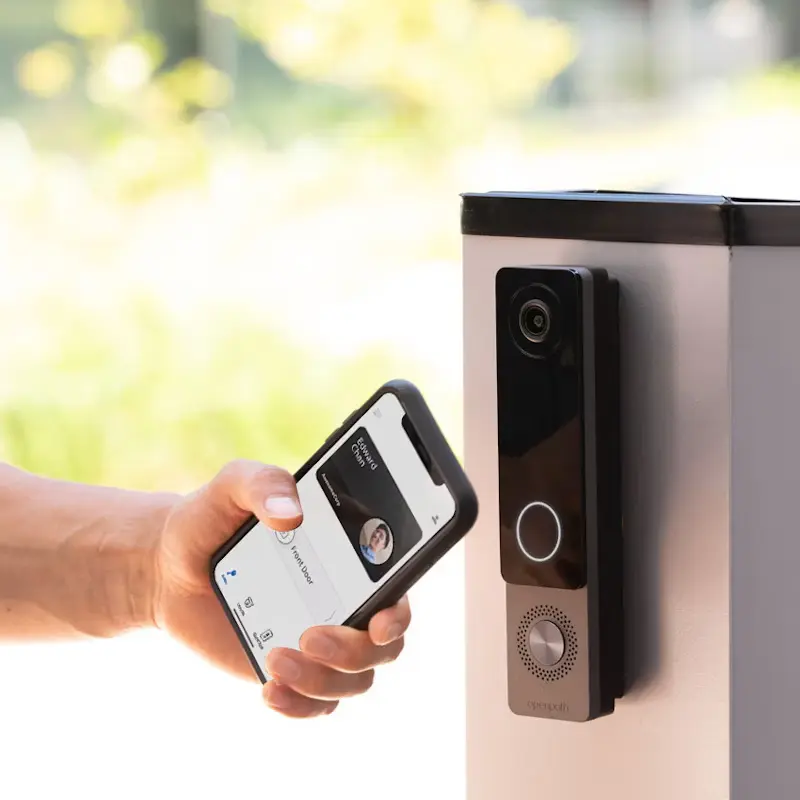
In a cloud-managed system, the administration layer is hosted remotely by the platform provider. Authorized property staff log in through a web portal or app to manage users, credentials, schedules, doors, and events.
This does not mean the door stops working if the internet blinks for a second. Good systems still rely on local hardware at the door and controller level for operational continuity. The cloud piece mainly affects how the property manages and monitors the system.
On-premise access control
In an on-premise system, the main software environment is hosted locally on the property or within the owner’s own infrastructure. Administration is often tied to a local server, workstation, or network environment that the property team or an IT department maintains.
This model can still be powerful, but it usually requires more internal ownership and more intentional support planning.
Why apartment communities should think beyond feature lists
Many vendors frame this decision around software features. That is only part of the picture. In multifamily, the more important question is how the system fits the property’s operating reality.
Apartment communities deal with:
- Frequent resident turnover
- Ongoing vendor access changes
- Delivery and visitor traffic
- Amenity schedules
- After-hours issues
- Regional management oversight
- Multiple buildings or entrances
A system that looks good in a demo but creates friction for these everyday workflows can become a problem very quickly.
Advantages of cloud-managed access control for multifamily properties
For many properties, the biggest strength of cloud-managed access control is administrative agility.
Faster credential changes
Move-ins, move-outs, staff turnover, and vendor changes happen constantly in multifamily. Cloud-managed systems often make it easier to:
- Issue credentials quickly
- Revoke access immediately
- Create temporary access windows
- Change schedules without being onsite
That saves time for leasing and management teams and reduces the risk of outdated access staying active longer than it should.
Better remote visibility
Regional managers and ownership groups often want oversight without depending on onsite staff for every request. Cloud-managed platforms can make it easier to:
- Review activity logs remotely
- Standardize policies across properties
- Compare door groups and user roles
- Respond faster to incidents after hours
For operators managing multiple communities, this becomes a major operational advantage.
Easier software maintenance
Cloud platforms usually simplify software updates, interface changes, and platform-wide improvements. That can reduce the burden on internal teams compared with maintaining a local server environment.
Stronger fit for growing portfolios
If a company expects to add properties or standardize operations across a portfolio, cloud-based administration often makes that easier. The management model can scale without building a separate local admin structure for every community.
Where on-premise systems still make sense
Cloud-managed systems are not automatically the right answer for every site.
An on-premise system may still make sense when:
- A property has strict internal IT control requirements
- The owner prefers local hosting for policy reasons
- A site has legacy infrastructure that is deeply tied to an existing local platform
- The management team has the technical resources to own server-side maintenance
- The property has unusual integration or customization requirements
In these cases, the decision is less about whether cloud is modern and more about whether local control provides a meaningful operational or policy benefit.
The hidden operational cost of on-premise systems
On-premise platforms are sometimes chosen because they appear more controlled or because software licensing looks different upfront. But the ongoing support burden is often underestimated.
Property managers should ask:
- Who maintains the server or workstation?
- Who manages backups?
- Who handles software patching?
- Who supports remote access for authorized managers?
- Who responds when the local environment fails?
- How is uptime monitored?
If the answers are unclear, the property may be taking on more operational risk than expected.
Infrastructure questions that matter in both models
Cloud vs on-premise is not just a software debate. Both models still depend on reliable physical and network infrastructure.
That includes:
- Door hardware quality
- Controller placement
- Structured cabling
- Power supply design
- Battery backup
- Secure network segmentation
- Internet reliability where cloud management is involved
In multifamily properties with multiple buildings, this may also include:
- Fiber between structures
- Weather-protected enclosures
- Gate communication planning
- Support for intercom, cameras, and remote diagnostics
If the infrastructure is weak, both system models can suffer. The difference is that cloud systems often get blamed for problems that actually come from structured cabling, switching, power, or door hardware.
Security and cybersecurity considerations
Security in this decision should be evaluated in two layers.
Physical security layer
The system must securely control doors, gates, amenities, and staff-only areas. That means the quality of readers, locks, panels, and request-to-exit devices matters no matter which software model is chosen.
Cybersecurity layer
Because access control is a connected system, cybersecurity matters as well. Property teams should ask about:
- Role-based permissions
- Multi-user admin controls
- Password policies
- Audit logging
- Update processes
- Network architecture
- Remote support access
Cloud vendors should be evaluated carefully, but local systems should not get a free pass. On-premise environments can also be vulnerable if patching, remote access, or credential management are handled poorly. That same overlap between cyber and physical security is one reason more owners are reading about why commercial buildings are moving toward integrated security and IT systems.
Comparing cloud and on-premise for key multifamily use cases
| Use Case | Cloud-Managed Strength | On-Premise Strength |
|---|---|---|
| Resident turnover | Fast credential changes from anywhere | Can work well if onsite admin processes are strong |
| Multi-property visibility | Excellent | Usually weaker unless custom infrastructure is built |
| Regional oversight | Strong | Often more complicated |
| Local IT control | Moderate, vendor dependent | Strong |
| Software maintenance | Simpler for property teams | More internal responsibility |
| Portfolio standardization | Strong | Harder to scale cleanly |
| Deep customization | Varies by vendor | Can be stronger in some legacy or specialized environments |
For most apartment operators, the value of cloud-managed access control is not that it sounds newer. It is that it better matches the speed and complexity of multifamily administration.
Cost should be measured beyond hardware and licensing
Buyers often compare systems based on upfront purchase price or licensing structure, but that does not capture the full operating picture.
A better cost discussion includes:
- Credential replacement costs
- Time spent managing users
- Service call frequency
- Infrastructure upgrades
- Server or software maintenance
- Downtime risk
- Difficulty of scaling to additional buildings or properties
An on-premise system may appear less expensive in one column while costing more in staff time and long-term support. A cloud-managed system may have recurring fees, but those fees may be offset by faster operations and fewer internal maintenance demands.
Questions property managers should ask vendors before choosing
Questions for cloud-managed systems
- What happens at the door if internet connectivity is interrupted?
- How are admin roles and permissions managed?
- How are updates handled?
- What reporting is available across multiple properties?
- How does the platform support visitors, deliveries, and vendors?
- What is required from the property network?
Questions for on-premise systems
- What local hardware or server environment is required?
- Who patches and backs up the system?
- How is remote admin handled securely?
- What happens if the local host fails?
- How easily can the system expand to other properties?
Questions for both
- How does the system integrate with video entry and cameras?
- What cabling and network work is required?
- How are after-hours service issues handled?
- What doors or amenities should be prioritized in phase one?
A practical recommendation for most multifamily operators
For most apartment communities, especially those that value speed, remote visibility, and portfolio growth, cloud-managed access control is often the stronger fit. It supports the realities of modern property management and usually creates fewer administrative bottlenecks.
That does not mean every cloud product is a good product. Vendor selection still matters. Infrastructure still matters. Door hardware still matters. Policy design still matters.
Likewise, on-premise systems are not obsolete. They can still be appropriate in environments with unusual IT requirements or a very specific existing architecture. They just require more intentional support ownership.
The best decision starts with a full property assessment
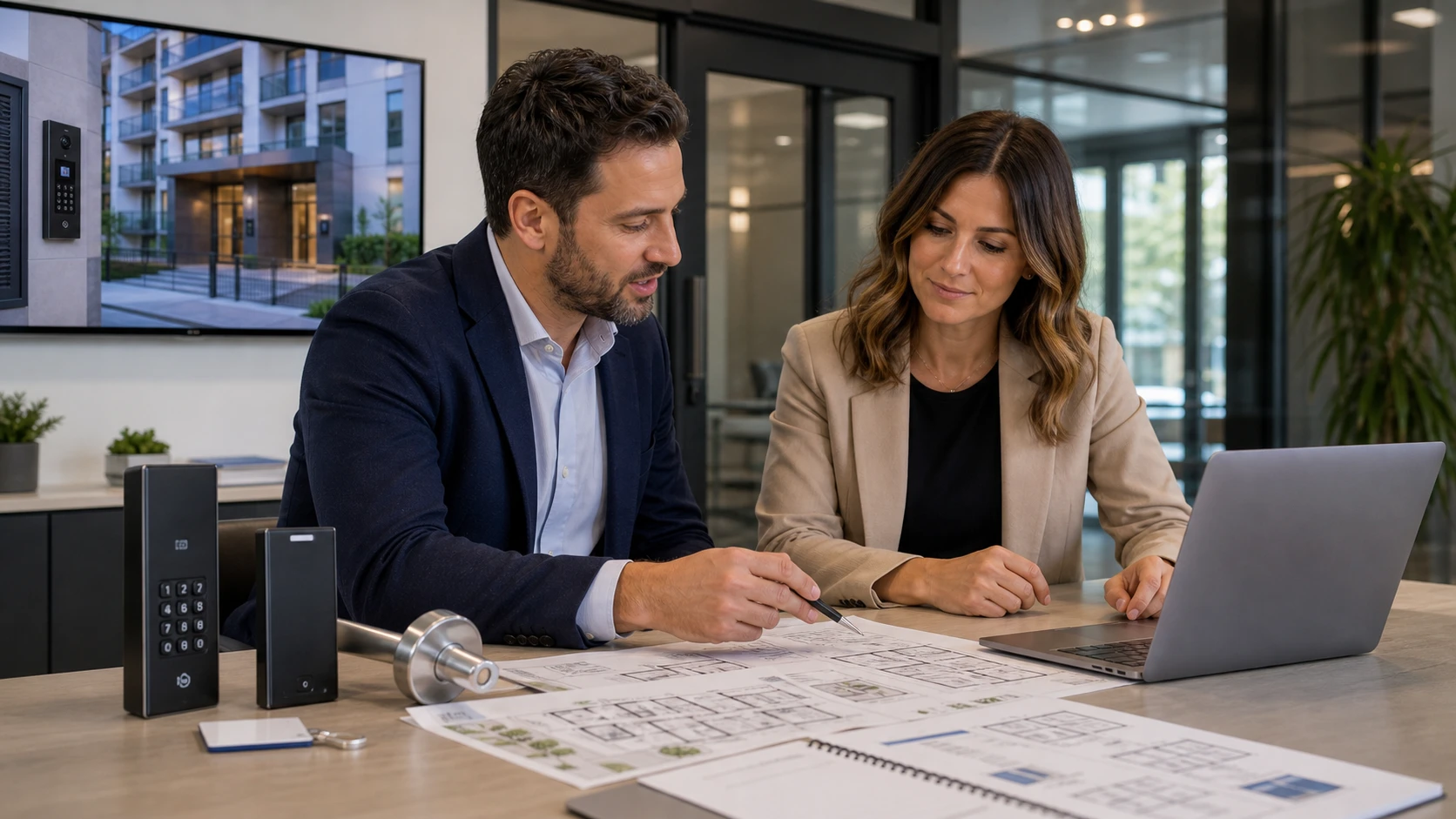
The right answer is rarely found by comparing brochures alone. Property teams should start with an assessment of the property’s access control, network readiness, support model, and long-term portfolio goals. A formal consultation can help teams compare both models against the realities of the site instead of relying on generic product demos.
- Existing doors and hardware
- Current credential workflows
- Network and cabling conditions
- Number of buildings and entry points
- Amenity and staff-only space needs
- Portfolio growth plans
- Internal support capabilities
From there, the system choice becomes much clearer.
For multifamily communities in Nashville, across Tennessee, and nationwide, the goal should be the same regardless of the hosting model: build an access control environment that is secure, manageable, scalable, and aligned with the way the property actually operates.
Frequently Asked Questions
Is cloud access control more secure than on-premise?
Not automatically. Security depends on product quality, configuration, credential management, network design, and update discipline. Cloud and on-premise systems can both be secure or poorly managed.
Does cloud-managed access control stop working if the internet goes down?
A properly designed system should still maintain local door functionality through its controllers and hardware. The cloud layer mainly affects administration and monitoring.
Is on-premise access control cheaper?
Not always. Some on-premise systems look less expensive upfront, but long-term support, maintenance, and admin burden can change the real cost significantly.
Which option is better for a multi-property apartment portfolio?
In many cases, cloud-managed access control is better suited for multi-property visibility, standardized workflows, and regional oversight.
What should be reviewed before choosing either system?
The property should review door hardware, cabling, networking, power, amenity access needs, user workflows, and long-term management goals.
Planning a project? Explore our multifamily security and technology planning for the next step.