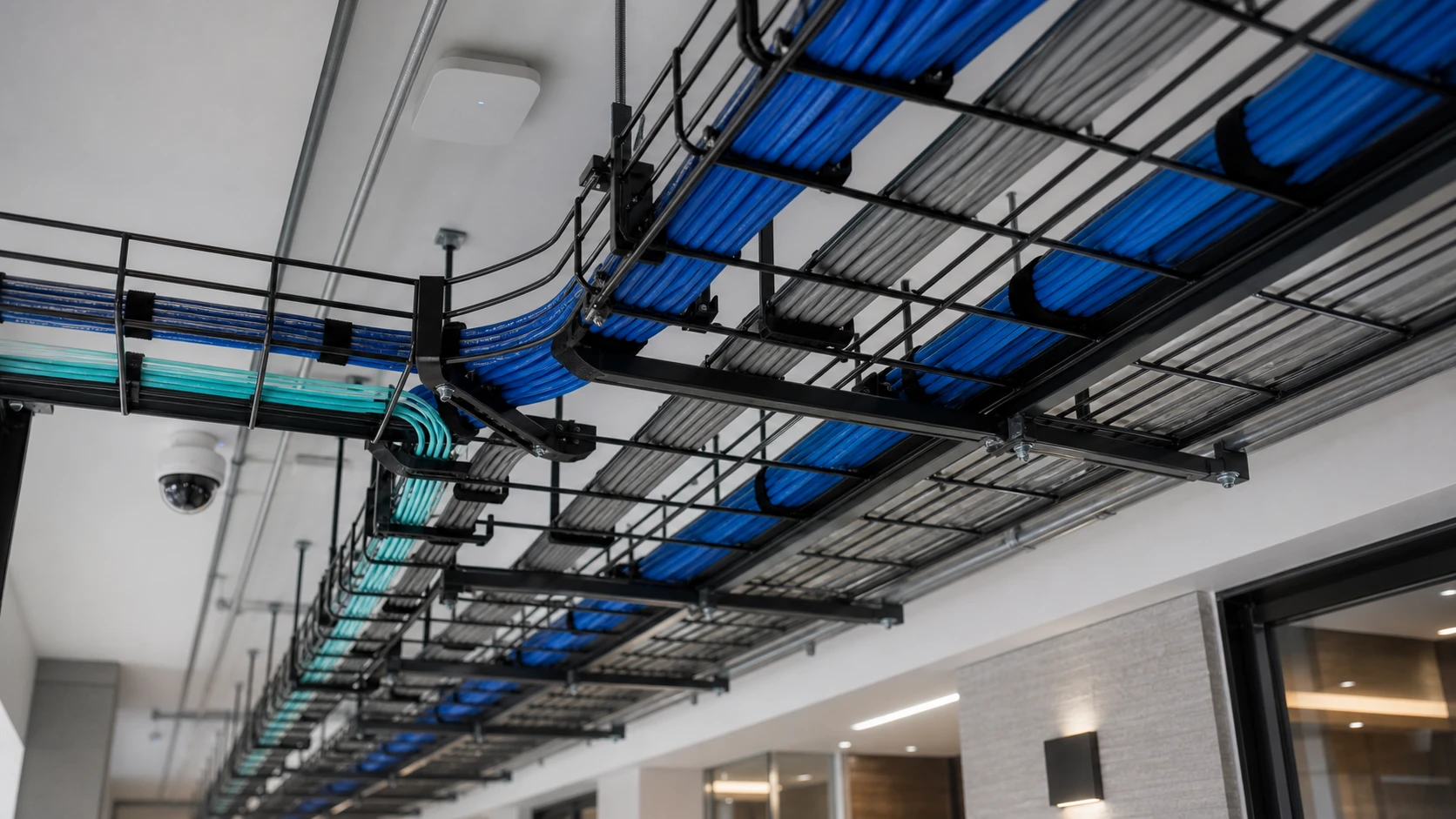
When multifamily technology underperforms, the visible problem is often a camera that drops offline, an intercom that lags, a Wi-Fi complaint, or an access control door that behaves inconsistently. The root issue, however, is often less visible. It is the building’s cabling and low-voltage infrastructure.
Structured cabling is the foundation that supports connected systems across a property. Without it, access control becomes less reliable, security cameras become harder to trust, amenity technology becomes inconsistent, and future upgrades become more expensive.
For apartment communities, mixed-use properties, student housing, and build-to-rent developments, structured cabling should be treated as critical infrastructure, not as an afterthought.
What structured cabling means in a multifamily environment
Structured cabling is the organized physical cabling system that supports voice, data, security, audiovisual, and other low-voltage technologies throughout a property. Instead of installing systems in disconnected ways over time, structured cabling creates a standardized backbone that can support many building systems at once.
In multifamily properties, that may include:
- Access control
- Video intercom
- Security cameras
- Wi-Fi access points
- Leasing office networks
- Amenity technology
- Digital signage
- Telecom and IT rooms
- Building-to-building connectivity
The goal is not just to run wire from point A to point B. It is to create an organized, documented infrastructure that supports performance, maintenance, and future growth.
Why multifamily properties need a stronger cabling strategy than ever
Apartment communities now rely on much more technology than they did a decade ago. The average property may have:
- More connected doors and gates
- More package traffic
- More expectation for strong wireless service
- More cameras in common areas
- More reliance on mobile-based resident tools
- More smart-building amenity demands
When these systems are layered onto a property without a real infrastructure plan, problems stack up quickly.
Common symptoms include:
- Intermittent camera outages
- Weak or inconsistent Wi-Fi in amenity spaces
- Slow or unreliable intercom performance
- Difficult access control troubleshooting
- Messy telecom rooms
- No room for expansion
Structured cabling is how properties avoid those conditions.
What systems depend on structured cabling in multifamily properties
Access control
Controllers, readers, request-to-exit devices, and related hardware all depend on stable low-voltage infrastructure. Poor cabling design can lead to unreliable door behavior, harder troubleshooting, and more service calls.
Video surveillance
IP camera systems rely on both cabling quality and network design. A camera system is only as dependable as the pathways, switching, and power that support it.
Apartment intercom and video entry
Modern visitor entry systems require dependable connectivity and clean low-voltage planning, especially when the property includes gates, detached entries, or multiple buildings. That is particularly true for video entry systems that need dependable audio, video, and door-release performance.
Wi-Fi and network services
Resident expectations around connectivity are high, especially in amenity spaces, leasing environments, and smart-building use cases. Reliable wireless service starts with reliable wired infrastructure.
Amenity and smart-building systems
Coworking areas, clubhouses, LED displays, digital signage, and other amenity technologies depend on organized infrastructure if they are going to work reliably over time.
The role of fiber in multifamily environments
Copper cabling supports a lot of building needs, but some multifamily properties also require fiber optic infrastructure. This is especially true when:
- Buildings are spread across a larger site
- Detached amenities need strong connectivity
- Gate systems are located far from main equipment rooms
- The property needs higher capacity between telecom spaces
Fiber creates a stronger backbone for:
- Building-to-building connectivity
- Long-distance network runs
- Higher bandwidth applications
- Future growth
For larger communities or properties with multiple structures, fiber planning should often happen at the same time as the overall cabling design.
Why poorly planned cabling costs more later
One of the biggest mistakes owners make is assuming cabling is just a commodity scope that can be minimized. In reality, poor low-voltage planning often leads to higher total costs.
Those costs show up through:
- More troubleshooting
- More change orders
- More downtime
- More limitations when adding new systems
- More difficult vendor coordination
- Earlier replacement of poorly executed work
A clean infrastructure plan gives the property flexibility. A disorganized one forces the property into constant workarounds.
What a good multifamily cabling design should include
Clear pathways and distribution planning
Cabling should be routed intentionally through the property with documented pathways, not improvised during installation.
Proper telecom room planning
Main and intermediate telecom spaces should be organized, secure, and sized for both current and future equipment.
Labeling and documentation
Good documentation is one of the most overlooked assets in a multifamily technology project. Labeled terminations, updated drawings, and organized racks make service and expansion far easier later.
Segmentation by system use
Different systems have different traffic and security needs. Infrastructure should be planned so access control, surveillance, office IT, guest networks, and other services can be supported appropriately.
Space for future growth
Properties should not design only for today’s minimum needs. They should leave room for new cameras, new readers, additional amenities, and future smart-building tools.
Renovation projects vs new construction
Structured cabling strategy looks different in a renovation than it does in a new build, but both require planning.
In new construction
Developers have the chance to coordinate:
- Pathways
- Closets
- power
- Building-to-building backbone
- Device locations
- Future expansion capacity
That makes it much easier to align access control, Wi-Fi, cameras, AV, and IT from the start.
In renovation or repositioning projects
The job is often about working around existing constraints while still improving the infrastructure meaningfully. That may include:
- Reusing some viable pathways
- Rebuilding select closets
- Adding fiber where none existed
- Prioritizing critical systems first
- Creating a phased modernization roadmap
The most important step is assessing what is actually in place instead of assuming the existing infrastructure can support new demands.
Common multifamily cabling mistakes
Mistake 1: Designing around one system at a time
If access control, cameras, Wi-Fi, and intercom are all planned separately, the property often ends up with conflicting pathways, duplicated work, and poor coordination.
Mistake 2: Underbuilding the backbone
Properties that only plan for today’s minimum traffic often struggle when they add more cameras, cloud-managed systems, or amenity upgrades later.
Mistake 3: Ignoring documentation
Unlabeled racks and undocumented cabling add cost every time service or expansion work is needed.
Mistake 4: Poor closet and enclosure organization
Messy low-voltage spaces make maintenance harder and create avoidable service risk.
Mistake 5: Not planning for detached or exterior systems
Gates, detached gyms, clubhouses, and remote site structures need the same infrastructure discipline as the main building.
How structured cabling supports resident experience
Property owners sometimes think of cabling as invisible infrastructure that residents never notice. That is only partly true. Residents notice the outcomes of good or bad infrastructure every day.
Good structured cabling helps support:
- Faster and more reliable entry systems
- Better video intercom performance
- More stable camera coverage in common areas
- Stronger Wi-Fi where residents expect it
- Better operation of amenity technology
In that sense, cabling directly affects resident satisfaction even if residents never see the cabling itself.
How property managers should evaluate low-voltage proposals
A good structured cabling proposal should not just list cable counts. It should explain how the infrastructure supports the property’s systems and future growth.
Property managers should ask:
- What systems is this design intended to support?
- How are pathways and closets being planned?
- Is fiber included where it should be?
- How will the design support access control and cameras?
- What documentation will be delivered at closeout?
- Is there room for expansion?
- How will the work affect occupied areas during installation?
These questions help separate commodity pricing from real infrastructure planning.
Why multifamily owners should coordinate cabling with security and IT planning
The strongest outcomes happen when structured cabling is designed alongside:
- Access control
- Video surveillance
- IT infrastructure
- Intercom and visitor entry
- Wi-Fi and network solutions
- AV and signage systems where applicable
This coordinated approach reduces duplicate work and gives the property a more future-ready technology environment. It also supports the kind of integrated planning covered in structured cabling vs network infrastructure and why commercial buildings are moving toward integrated security and IT systems.
For properties in Nashville, throughout Tennessee, and across the country, it also creates a better platform for phased improvements. If the backbone is strong, future upgrades become easier and more cost effective.
Structured cabling is not glamorous, but it is strategic
Owners and managers rarely market a property around its cabling plant. But when the low-voltage foundation is weak, every connected system becomes harder to manage. When the foundation is strong, doors work better, cameras are easier to trust, intercom is more dependable, and expansions cost less.
That is what makes structured cabling strategic. It is not just a technical scope. It is the physical infrastructure that supports the property’s security, connectivity, and operational technology for years to come.
Before adding new smart-building features or security upgrades, multifamily operators should evaluate whether the underlying infrastructure is ready. In many cases, that assessment is the difference between a clean long-term solution and another round of temporary fixes. A focused consultation helps teams prioritize which systems to support first and what backbone work should happen before the next round of upgrades.
Frequently Asked Questions
What is structured cabling for multifamily properties?
It is the organized low-voltage infrastructure that supports systems such as access control, cameras, intercom, Wi-Fi, office IT, and other connected technologies throughout the property.
Why does structured cabling matter for apartment buildings?
Because access control, surveillance, visitor entry, and wireless connectivity all depend on reliable cabling and network pathways to perform consistently.
Do apartment communities need fiber optic cabling?
Some do. Fiber is often important when a property has multiple buildings, remote gates, detached amenities, or higher-capacity backbone needs.
Can old cabling cause access control and camera issues?
Yes. Poor or outdated infrastructure can contribute to unstable device performance, harder troubleshooting, and limited expansion options.
What should a multifamily cabling proposal include?
It should address pathways, telecom spaces, system support, labeling, documentation, expansion planning, and building-to-building connectivity where needed.
Tolleson Inc.
Planning a multifamily infrastructure upgrade?
Tolleson Inc. helps owners, developers, and property managers plan structured cabling, fiber backbones, access control, surveillance, and supporting IT infrastructure for multifamily properties in Nashville, throughout Tennessee, and nationwide. If you are evaluating a renovation, new construction project, or phased upgrade, start with a consultation to map the right infrastructure strategy and supporting systems.
Planning a project? Explore our structured cabling for your project for the next step.
Planning a project? Explore our multifamily security and technology planning for the next step.