Power over Ethernet can simplify deployment by carrying network communication and power over the same structured cabling connection. It does not remove the need for a power plan. Cameras, intercoms, wireless access points, and other connected building devices still draw from finite switch capacity and depend on the cabling, equipment room, and backup-power design.
Good PoE planning for security cameras begins with a device-by-device inventory and ends with measured commissioning results.
Inventory the exact powered devices
List every proposed device, its location, model, network connection, and documented power requirement. Include accessories that change consumption, such as heaters, infrared illumination, or auxiliary components. Use current manufacturer documentation for the exact model rather than a generic estimate for the device category.
Record planned future ports separately. A spare switch port does not automatically mean spare power capacity is available.
Check both port and switch capacity
The design must support the requirement at an individual port and across the total powered-device budget of the switch. Ask the network designer to show how the proposed load, environmental conditions, and reserve fit the selected equipment.
Avoid filling a worksheet with the maximum label value for every device without explaining the assumption. Also avoid sizing only from typical consumption when the manufacturer requires more under certain operating conditions. The purpose is a defensible plan that can be compared with real measurements after installation.
Treat cabling as part of the power path
Cabling category, conductor material, length, bundling, terminations, and installation conditions can influence performance and heat. Specify recognized compliant components and testing appropriate to the project. The structured cabling handover guide explains the records owners should receive for permanent links and pathways.
Coordinate with low-voltage structured cabling specialists rather than treating the patch cord and horizontal cable as invisible parts of the device purchase.
Map upstream dependencies
A powered camera still becomes unavailable if its switch, upstream network, recorder, or application fails. Identify switch power sources, uninterruptible power supplies, generator coverage where applicable, uplinks, firewall paths, and recording dependencies.
Define the intended runtime and the loads included in that calculation. Then plan a supervised test. Battery age and connected equipment can change the real result over time, so recurring maintenance belongs in the operating plan.
Account for the equipment-room environment
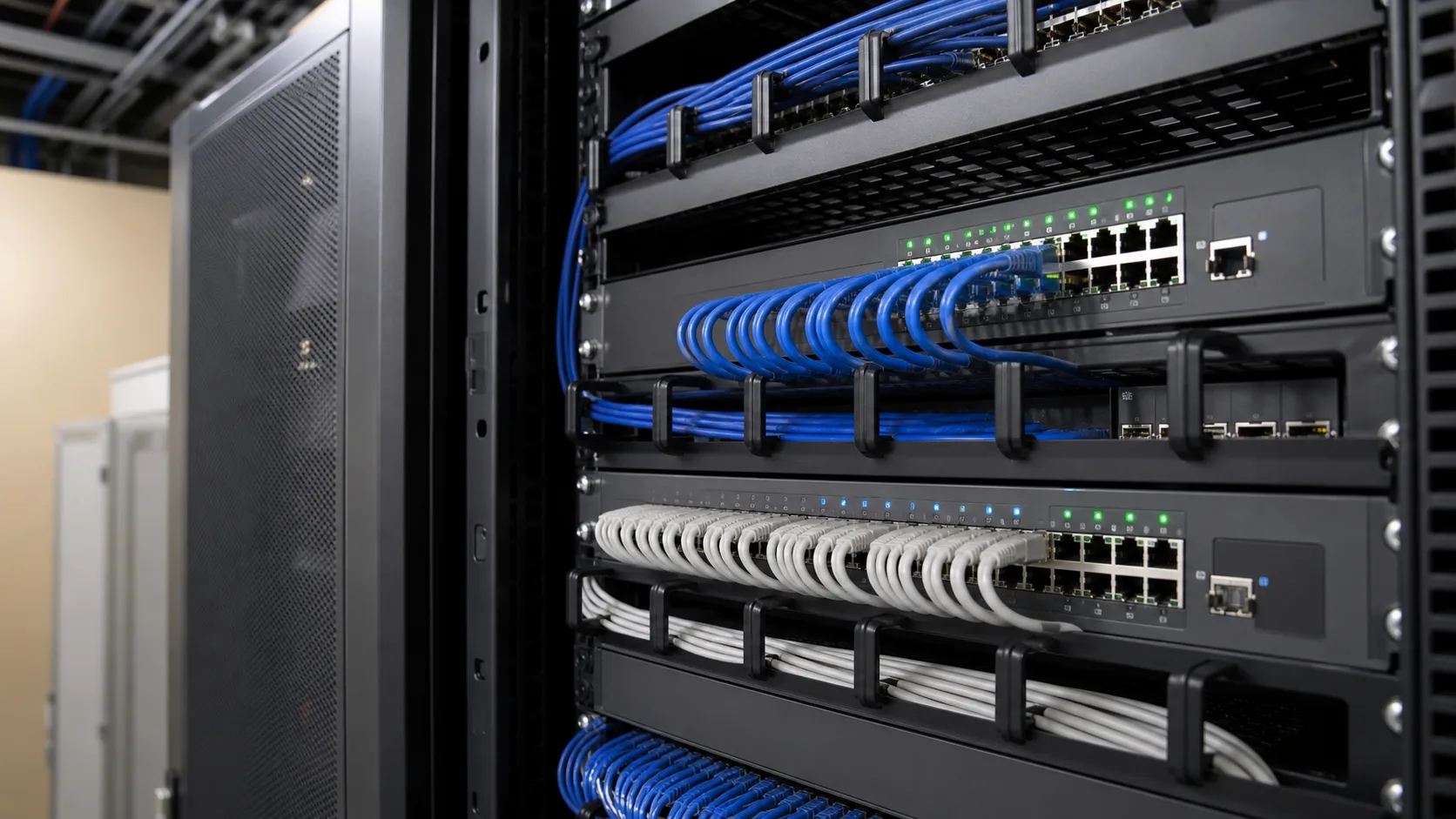
Power delivered to devices also becomes heat in switches and power supplies. Confirm rack space, ventilation, ambient conditions, cable management, electrical circuits, grounding approach, and physical access. Outdoor or industrial locations may require equipment rated for conditions that an office switch is not designed to handle.
Commission with measurements and records
At handover, compare the installed device list with the design. Review switch power reporting where supported, confirm device operation under representative conditions, inspect logs for repeated power negotiation or link events, and record any exceptions.
Final documentation should include:
- Device and switch inventory
- Port assignments and network identifiers appropriate for the owner
- Cabling test results and labeling records
- Planned and observed power use
- UPS and upstream dependencies
- Administrative ownership, monitoring, and escalation contacts
- Capacity reserved for approved future growth
The network solutions team and physical-security stakeholders should approve one coordinated design. That helps prevent a camera or intercom project from becoming an unexpected network-rack problem late in installation.
Tolleson Inc. plans commercial security, cabling, and network infrastructure as connected systems. Talk through your project before finalizing device counts and switch capacity.