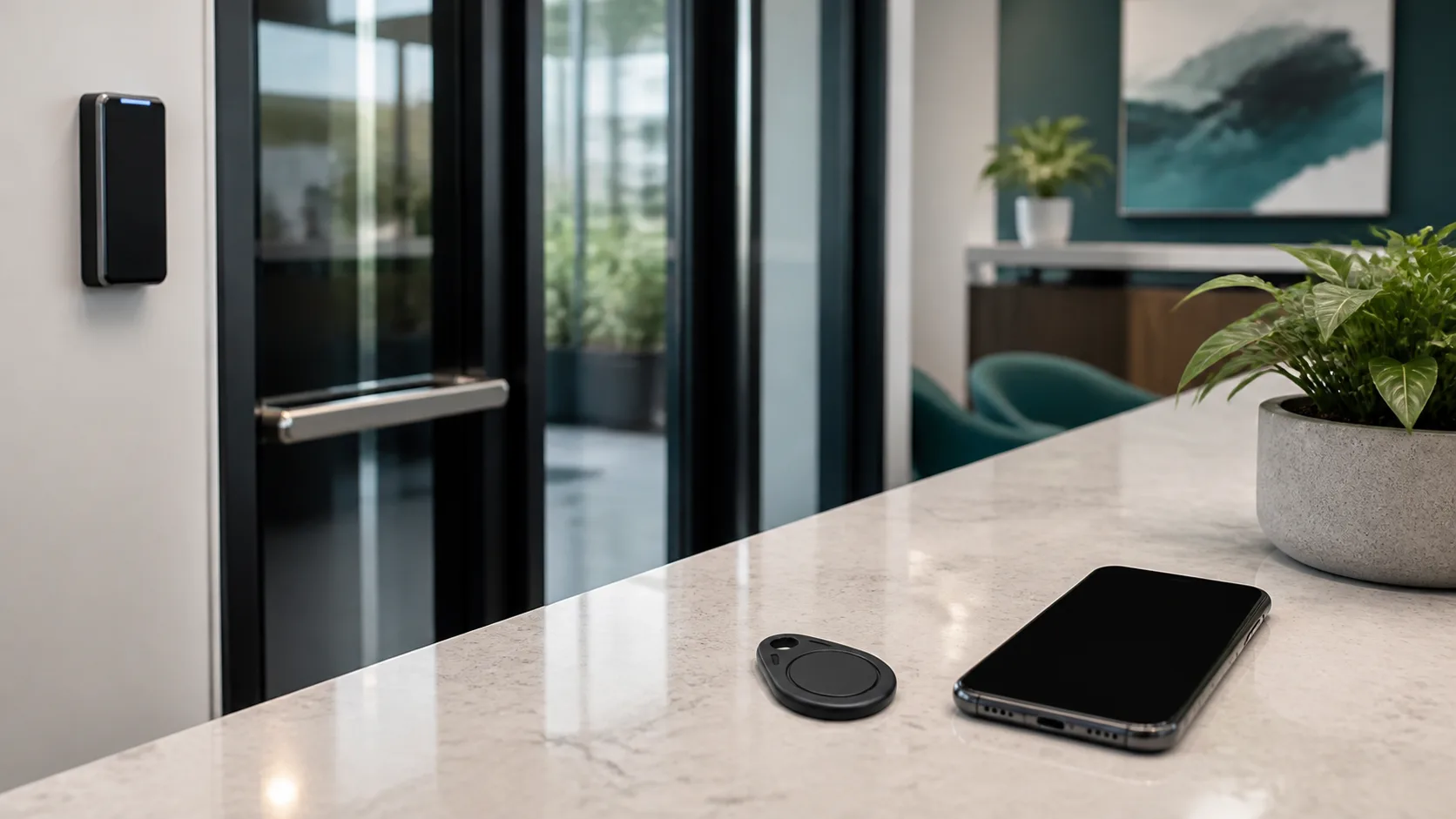
Choosing between mobile credentials and key fobs is an operational decision, not simply a preference for newer technology. Both can support a well-managed commercial access-control program. The better fit depends on who enters the property, how administrators issue and revoke access, what devices people carry, and which costs the organization is prepared to manage.
Use this guide to compare mobile credentials vs key fobs before selecting readers, licensing, or a rollout plan.
Start with the people who need access
List employees, contractors, temporary staff, vendors, and regular visitors. Note how often each group changes and whether everyone has an organization-managed phone. A corporate office with stable staff may have a different answer than a warehouse with rotating shifts or a multifamily property with vendors and resident turnover.
Key fobs are familiar and do not depend on a user’s phone ownership. They can be issued at a desk and returned at the end of an assignment. They also create a physical inventory: someone must purchase, store, label, issue, recover, and deactivate them.
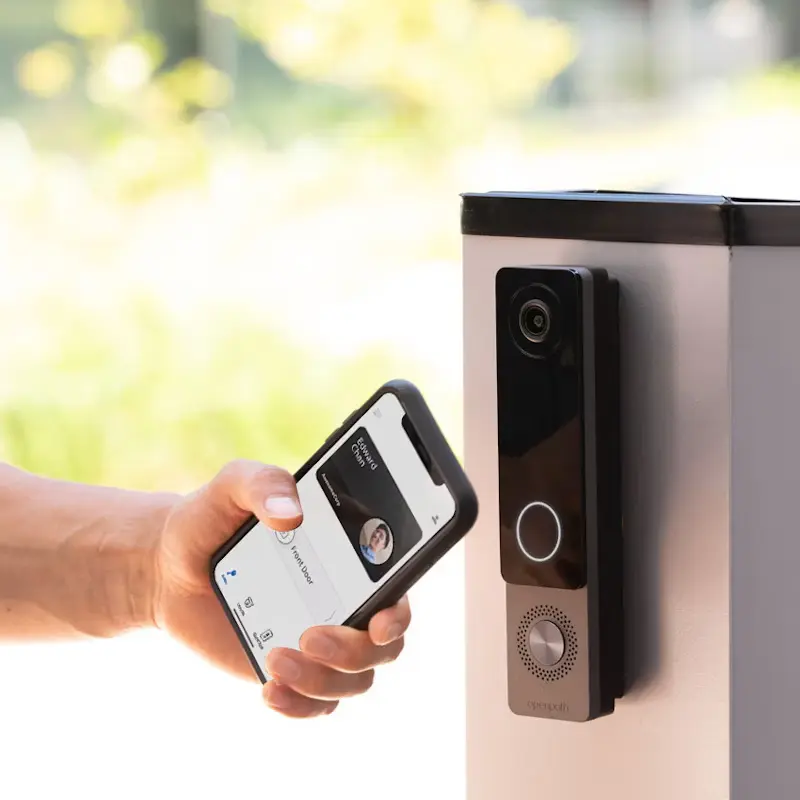
Mobile credentials can reduce that physical handoff for some users. Enrollment and revocation may be handled remotely, depending on the selected platform. They also introduce questions about personal devices, supported operating systems, Bluetooth or near-field behavior, app enrollment, and what happens when a phone is replaced or its battery is unavailable.
Compare the full administrative workflow
Ask the proposed vendor to demonstrate the exact process rather than relying on a feature list. Walk through:
- Adding a new employee and assigning the correct doors and schedule
- Issuing access to a contractor with a fixed expiration
- Replacing a lost fob or phone without leaving the old credential active
- Moving a user between departments or locations
- Reviewing who has administrative rights
- Exporting an access report when an incident is reviewed
The commercial access control audit checklist can help document the current workflow before comparing a replacement.
Identify costs that continue after installation
Separate reader and installation costs from recurring credential, software, support, and mobile-service charges. Ask whether unused credentials can be reassigned, whether licenses have a minimum quantity, and which features require a particular subscription tier. Product terms vary, so verify them against the written proposal and current manufacturer documentation.
Include staff time as well. A lower per-credential price may not help if every change requires a slow manual process or outside service call.
Plan for visitors and exceptions
Neither option automatically solves visitor access. Decide whether reception staff issue temporary fobs, send time-limited mobile invitations, call a host, or use a separate visitor-entry workflow. Include people who do not own a compatible phone or do not want to install an app on a personal device.
Define an exception path before launch. It should be easy for an authorized administrator to understand but still follow the property’s approval rules.
Run a representative pilot
Test with a small group that reflects real conditions: different phone types, job roles, shifts, doors, and connection conditions. Confirm enrollment, normal entry, revocation, phone replacement, and help-desk escalation. Record results instead of treating a successful vendor demonstration as acceptance testing.
The pilot should also confirm that proposed credentials work with the exact readers and platform in the scope. If existing hardware may be retained, review the access control retrofit planning guide before assuming compatibility.
Choose a policy, not just a credential
Some organizations use a primary mobile credential with fobs for defined exceptions. Others prefer a consistent physical credential across all workers. Either approach can work when enrollment, revocation, support, and ownership are documented.
Tolleson Inc. helps commercial facilities plan access control systems and the infrastructure that supports them. Schedule a consultation to compare the practical rollout for your building.